Keep, Simplify or Replace? A Pre-Listing Design Checklist
A distinctive finish is not automatically a problem to fix. Start with how it works, its condition and the scope of any proposed change.
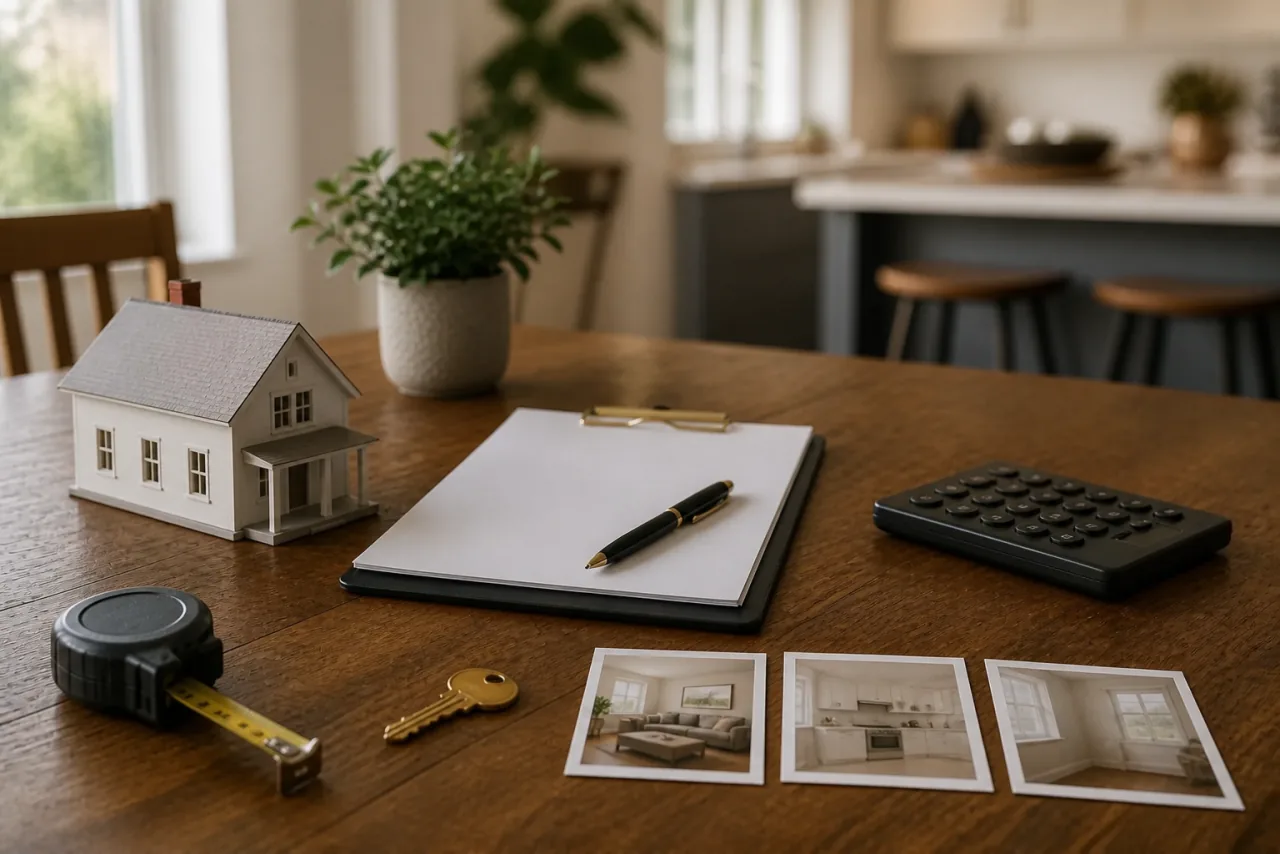
Illustration of home-preparation planning; not a photograph of a client property
Make the decision about your home
A label such as “dated” does not tell you whether a feature needs work. Separate three questions: Is it functioning? Is there a condition issue? Would a reversible presentation change address your concern? These questions give a seller a better starting point than an unsupported prediction about what is fashionable this year.
Make a room-by-room list before ordering materials. Give each feature one preliminary choice: keep, simplify its surroundings, or obtain an evaluation for possible replacement. Leave room to change that choice when you learn the cost and scope.
Open shelves: test the arrangement
If shelves are useful and in good condition, try arranging the objects you already own so the contents are easy to understand. Group everyday dishes separately from unrelated paperwork or items waiting to be stored. This is an optional visual test, not a requirement to make every shelf sparse or uniform.
If the concern is inadequate closed storage, restyling does not create a cabinet. Document that functional limitation and consider it in the broader preparation plan rather than promising that a decorative adjustment fixes it.
Feature walls: distinguish the finish from the display
Before repainting or removing a wall treatment, photograph it with fewer objects in front of it. Decide whether the surface itself bothers you or whether the surrounding arrangement is doing too much at once. Compare the two photographs in the same light.
A proposed removal can become a renovation. For painted surfaces in pre-1978 homes, EPA warns that work disturbing lead-based paint can create hazardous dust and recommends a lead-safe certified contractor. Review EPA’s homeowner guidance before planning that work.
Unusual doors or hardware: start with use
Write down the specific concern: the opening arrangement, privacy, appearance or a condition problem. Do not assume a style category tells you whether a door is appropriate. Have a qualified professional evaluate a function or installation concern; this checklist is not an installation guide.
Compare the complete scope
- Keep: describe what works and why no project is needed.
- Simplify: test a change to movable contents or surrounding decoration.
- Evaluate replacement: request the work scope, related finish repairs, scheduling and written quote.
- Defer: explain why the optional project does not fit the listing plan.
A quote is an expense estimate, not evidence of a corresponding sale-price increase. Review the decision with your agent alongside actual property condition, preparation priorities and your timeline. Avoid treating a national trend story as a local valuation.
If you are keeping an older feature, the older-home presentation checklist focuses on describing it accurately without claiming a revival or premium.
Make a plan for your particular home.
Discuss your NJ home, timing and preparation questions with Jorge. A practical walkthrough can help you decide what to consider and what to leave alone.
Discuss Your Preparation PlanSeller ResourcesQuestions about this checklist
Should I remove every finish described as dated?
No. Review condition, function and the scope of changing it. A label about style is not enough to justify a project.
Can simplifying a shelf solve a lack of storage?
No. Styling changes the arrangement of the contents; it does not create additional enclosed storage.
Will replacing a distinctive finish increase my sale price?
This guide makes no price or return prediction. Compare the actual work scope and preparation priorities with your agent before deciding.
Reviewed September 15, 2026. Styling suggestions are optional and subjective; no price, timing or buyer-response outcome is promised. Primary guidance is linked beside the specific factual points it supports.