A Showing-Day Staging Checklist for NJ Sellers
The final walkthrough is a chance to check that the home is understandable and usable, not to remove every sign that someone lives there.
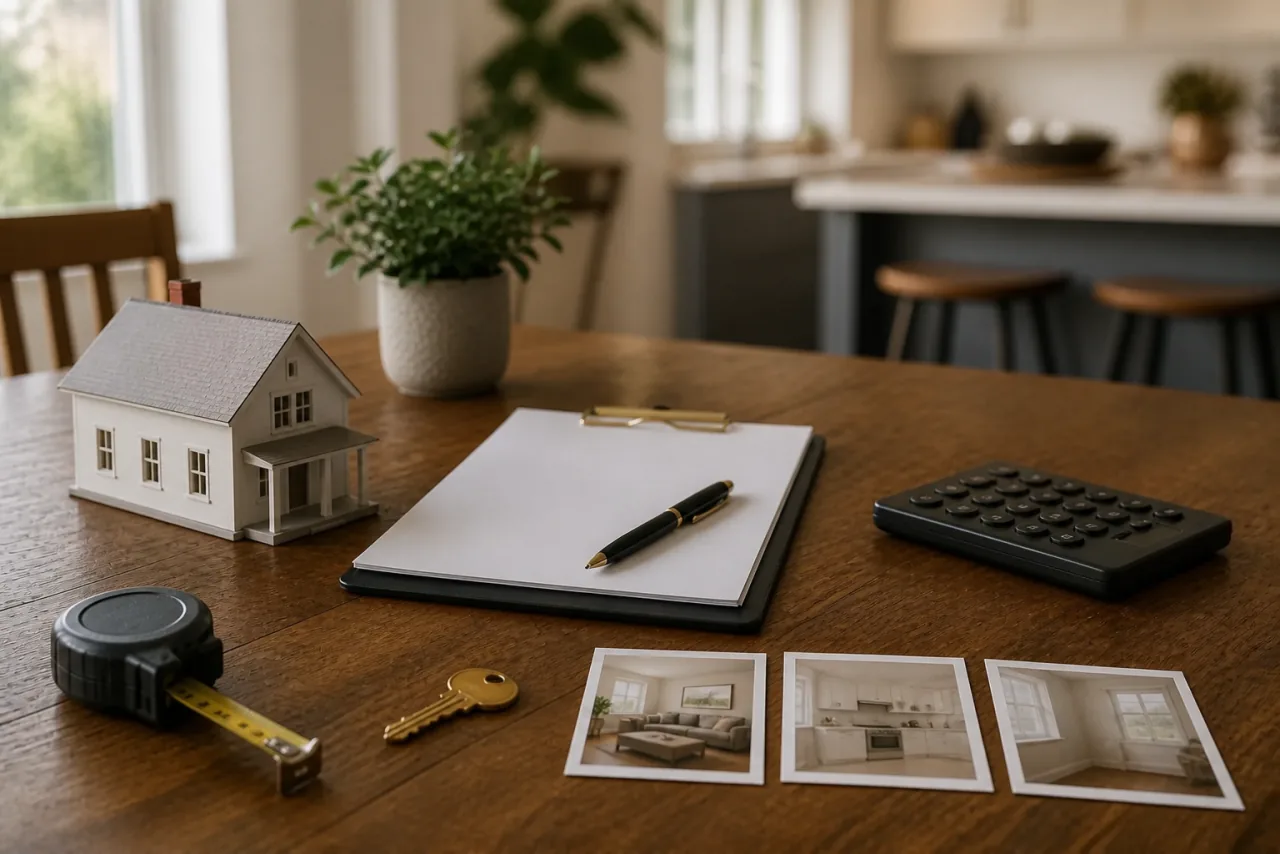
Illustration of home-preparation planning; not a photograph of a client property
Check the home you will actually show
Start at the arrival point an agent or visitor will use and walk through the planned route. Look for tasks you can describe plainly: put away a work project, return a moved chair, make a room available. This is a showing-readiness checklist, not evidence that a particular arrangement wins offers.
Review the appointment arrangements with your agent in advance. Household schedules, pets and rooms temporarily unavailable for use should be handled through the agreed showing process rather than improvised when someone arrives.
Check function before decoration
- Doors and passage: verify that the current furniture arrangement allows normal use of the doors and rooms. USFA says escape doors and windows should be unblocked. See its home escape guidance.
- Room purpose: show how the space currently works. A dining table used for homework does not require pretending the room has only one possible use.
- Everyday essentials: keep what the household needs accessible. Remove temporary clutter selectively rather than imposing a percentage of belongings that must disappear.
- Private belongings: use the security and access plan agreed with your agent for documents, valuables and personal items.
- Condition: do not place decor over an issue to prevent someone from seeing it. Put the concern on the appropriate professional or transaction discussion list.
Avoid staging that changes the room’s practical use
If moving the sofa makes a photograph simpler but makes the room awkward to use, consider a different arrangement. If removing a desk leaves nowhere to work during the listing, test a reset routine instead. Keep accommodations and equipment needed by occupants; a staging checklist should adapt to people, not ask them to abandon what they use.
Do not loosen or remove existing furniture safety restraints for a visual effect. CPSC’s Anchor It guidance recommends securing furniture and TVs according to manufacturer instructions.
Compare the room with the listing images
After the initial photography, note changes that materially affect what visitors will encounter. Discuss the need for updated images or explanation with your agent. A temporary stack of moving boxes and an unavailable room are different situations; handle the actual change rather than using a general rule.
Use a repeatable handoff
Write a short final check: the appointment is confirmed, the agreed rooms are available, the household plan is in place and temporary belongings are accounted for. After the showing, return items to their normal locations and record anything that made the routine difficult.
Adjust the process if it repeatedly disrupts daily life. There is no required number of cushions, empty shelves or cleared counters. For a broader work schedule before listing, see the preparation sequence.
Make a plan for your particular home.
Discuss your NJ home, timing and preparation questions with Jorge. A practical walkthrough can help you decide what to consider and what to leave alone.
Discuss Your Preparation PlanSeller ResourcesQuestions about this checklist
Should I remove half my belongings before showing the home?
There is no universal percentage in this checklist. Keep rooms usable and choose changes around the actual layout and household needs.
Should I remove equipment that an occupant needs?
No. Adapt the presentation around the people living there and keep needed equipment and accommodations available.
Will following this checklist improve my offers?
It is a preparation tool, not an offer or sale-price forecast. Pricing, condition, terms and individual decisions remain separate considerations.
Reviewed September 15, 2026. Styling suggestions are optional and subjective; no price, timing or buyer-response outcome is promised. Primary guidance is linked beside the specific factual points it supports.