Mixing Furniture Styles Before a Move or Home Sale
A room can contain furniture collected at different times. The task is deciding what works together for your room, not passing a style test.
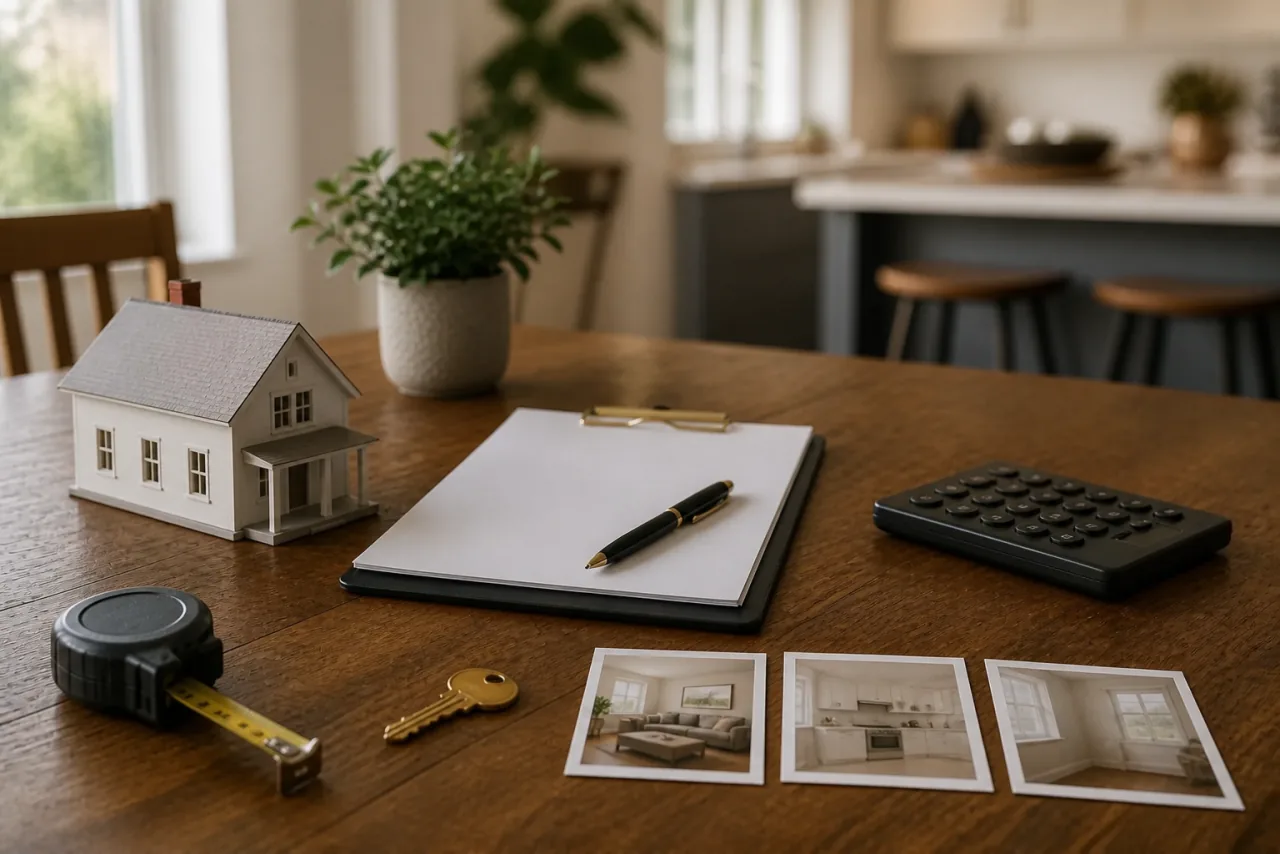
Illustration of home-preparation planning; not a photograph of a client property
Start with the pieces you need
List the furniture that supports the room’s everyday use and the pieces that matter personally to the household. Do that before assigning labels such as traditional, modern or coastal. A style label does not tell you whether a chair fits, a table is useful or a cabinet has a place in the next home.
Choose one room for the exercise. Mixing furniture throughout an entire home is too broad a decision to solve with a single color rule.
Look for an existing connection
You might like the repetition of a wood tone, a rounded shape, a metal finish or a textile color. Pick one connection to emphasize with items already in the room. It can be subtle, and every object does not need to share it.
For example, an older wooden table and a newer sofa might have no matching design history. A color already present in a cushion and a print may give you a connection you enjoy. This is an illustrative idea, not a claim that a particular combination appeals to more buyers.
Try contrast without changing everything
- Keep a useful contrast: compare the older and newer pieces in the room rather than assuming one must leave.
- Simplify a nearby display: if you find it distracting, temporarily remove some accessories so you can judge the furniture itself.
- Repeat selectively: test one existing color or shape elsewhere, then stop if the repetition feels unnecessary.
- Keep space usable: arrange around activities and movement, not around a requirement to display every piece.
When two households combine furniture
Ask each person to identify the pieces they need, the ones they care about and the ones they are willing to try elsewhere. Sketch more than one arrangement and agree on a reversible trial. Avoid disposing of an item simply because it does not fit someone else’s preferred label.
If you are also moving, mark which decisions depend on measurements from the next home. It is reasonable to postpone a furniture decision until those facts are known. The keep-and-review checklist provides an inventory approach.
Review the whole arrangement
Photograph the room and ask a specific question: can the seating be used comfortably by the household, is the work surface available, and do you like the relationship between the pieces? A response such as “I prefer the second layout” is a preference, not a market finding.
Before listing a NJ home, bring unresolved layout questions to your preparation walkthrough. There is no requirement here to buy a matching set, follow a percentage formula or predict the tastes of people moving from a particular city. The property and your circumstances deserve a more specific discussion.
Make a plan for your particular home.
Discuss your NJ home, timing and preparation questions with Jorge. A practical walkthrough can help you decide what to consider and what to leave alone.
Discuss Your Preparation PlanSeller ResourcesQuestions about this checklist
Do all wood tones or metal finishes have to match?
No rule in this checklist requires that. Test a connection you enjoy while keeping the room useful.
Will mixing styles make the home appeal to more buyers?
This article makes no universal buyer-preference claim. It offers optional ways to arrange what you own.
What should we do when we disagree about furniture?
Identify each person’s essential and meaningful pieces, test a reversible layout and postpone decisions that depend on missing measurements.
Reviewed September 15, 2026. Styling suggestions are optional and subjective; no price, timing or buyer-response outcome is promised. This article presents an organizational checklist rather than market or technical findings.