A Home Reset for Daily Life, Even When You Are Not Selling
You do not need to stage a home for hypothetical future buyers. You can borrow a few organizing habits for the people who live there now.
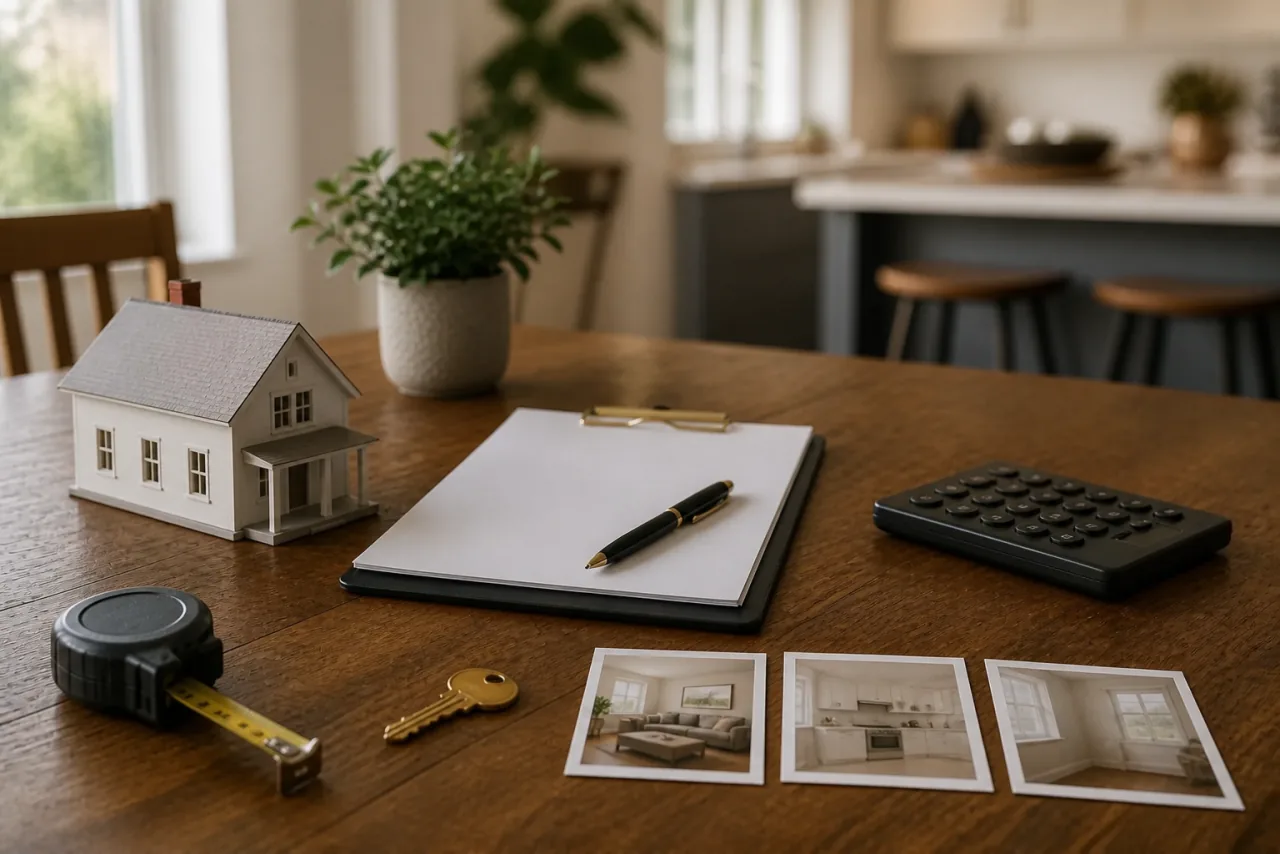
Illustration of home-preparation planning; not a photograph of a client property
Choose a recurring inconvenience
Start with something concrete: the entry surface fills with items that have no destination, a reading chair is difficult to reach, or a shared room has no place to put work away. Pick one inconvenience and describe the routine you want instead.
This is a household-use exercise. It does not require a listing date, a neutral color scheme or removing objects that matter to you. A home you enjoy living in need not resemble a photographed listing.
Make a small change and observe it
- Identify the activity: who uses the area and what are they trying to do?
- Give belongings a destination: choose a reachable place for the items involved instead of adding an organizer with no assigned purpose.
- Test the arrangement: use it during ordinary days, including the busy ones.
- Ask the people affected: a tidier-looking surface may not be an improvement if someone can no longer find what they need.
- Keep or revise: record what helped and undo changes that made the routine harder.
Keep a separate condition notebook
While rearranging, you may notice a condition concern or an unfinished task. Record the location, what you observed and whom to ask about it. Do not assume a cosmetic change resolves the concern, and do not turn a room reset into an unscheduled repair project.
Keep service records and any professional recommendations together so you can refer back to them. The notebook is a way to organize information, not a self-inspection report or a promise that keeping records protects a particular property value.
Set limits on optional purchases
Before buying a new item, write the job it will do and the space available. Try an existing piece first if that is practical. If the motivation is only that a future buyer might prefer it, consider waiting until there is an actual sale plan and property-specific advice.
Do not remove hobbies, collections or needed accommodations to maintain an indefinite showing-ready appearance. Your household can choose how much daily resetting is worthwhile. The room-layout worksheet offers a more detailed approach to function and measurements.
When a sale becomes a real plan
Revisit the property with your agent and separate the routines you already use from tasks needed for listing. Actual timing, occupancy, condition and your next move will shape that preparation. A room arranged for daily life may need only a short reset, or it may need a different plan.
You do not need to start cosmetic renovations years in advance to satisfy an imagined market. Keep decisions tied to a current need or a defined project. When you are ready, the listing-preparation sequence can help organize the work.
Make a plan for your particular home.
Discuss your NJ home, timing and preparation questions with Jorge. A practical walkthrough can help you decide what to consider and what to leave alone.
Discuss Your Preparation PlanSeller ResourcesQuestions about this checklist
Should I keep my house staged when I am not selling?
Only if the routine suits you. This guide focuses on daily use and does not ask homeowners to maintain a showroom for hypothetical buyers.
Does a room reset protect resale value?
This article does not make that claim. It can help you organize routines and record questions about the home, while valuation remains property-specific.
When should I start planning for a sale?
When selling becomes a realistic plan, discuss timing, occupancy and property condition with your agent. Then separate listing tasks from optional everyday changes.
Reviewed September 15, 2026. Styling suggestions are optional and subjective; no price, timing or buyer-response outcome is promised. This article presents an organizational checklist rather than market or technical findings.