Aspirational Clutter: The Organizing Gear That Makes a NJ Home Look Smaller Than It Is
House Outlook’s newsletter this week linked a Better Homes & Gardens article on what professional organizer Dr. Regina Lark calls aspirational clutter: things we keep because they stand for the person we meant to become, not the one who lives in the house. The sharpest example is the organizing gear itself. The bins, the over-door racks, the label maker, the shelving system still in the box. If you are listing a New Jersey home this fall, that gear is not helping you. It is taking up the storage a buyer is about to measure.

Stock photograph used for illustration; not a client property
The tip House Outlook published
The Better Homes & Gardens piece that House Outlook linked makes a simple point. Most clutter advice is about the stuff. Aspirational clutter is about the story behind the stuff: the bread machine for the baker you planned to be, the yoga mat, the craft supplies, and above all the organizing products you bought to fix the clutter. The article’s advice is to stop judging the item and judge the gap between the plan and your actual week. If the plan has not happened in a year, the gear is not a tool. It is a reminder, and it is taking up room.
I see the organizing version of this in almost every house I walk before listing. A hall closet with a shoe rack holding boxes. A garage with a wall-mounted track system and three bikes still leaning against the car. Six clear bins in the basement, half empty, stacked next to the pile they were supposed to hold.
Why organizing gear hurts a listing
Buyers do not open a closet to admire the system. They open it to see how much fits. A closet in a Cranford cape or a Maplewood colonial is already on the small side, and a seller who has lined it with hanging organizers, under-shelf baskets and stacked bins has made it look full of hardware. The eye reads the hardware as clutter, and the room reads as short on storage.
The same thing happens in the garage and the basement, which is where buyers in Westfield, Scotch Plains and Montclair go to decide whether the house has enough room for their life. Shelving units loaded with empty containers tell a buyer the owner ran out of space. Bare, clean shelves with a few labeled boxes tell them the house has room to spare. It is the same square footage. Only the story changed.
How to find the aspirational clutter in your house
- Start with the containers, not the contents. Walk through every closet, the garage and the basement and count the bins, baskets, racks and organizers. Then count how many are actually full of things you used this year.
- Ask when, not whether. For each system, name the last month it worked as intended. If you cannot, it goes on the review list, no matter what it cost.
- Empty the half-full bins into one place. You will usually find that four bins of odds and ends fit in one, and that most of what is left is the no pile.
- Pull the unopened gear. The shelving still in the box, the drawer dividers in the bag and the closet kit you never installed should leave the house this week. A buyer will see them as a project the owner gave up on.
- Keep the systems that hold what stays. A coat closet with one shelf and a row of hooks that get used every day is a selling point. Leave those alone and clean them.
- Photograph the closets after. If a phone photo of the open closet still shows more hardware than space, you are not done.
Jorge’s tip: Run the move-out question on the organizing gear itself: would you pay a mover to pack six empty bins? Almost nobody would. Then stage what remains with the small closet guide so the space, not the containers, is what buyers remember.
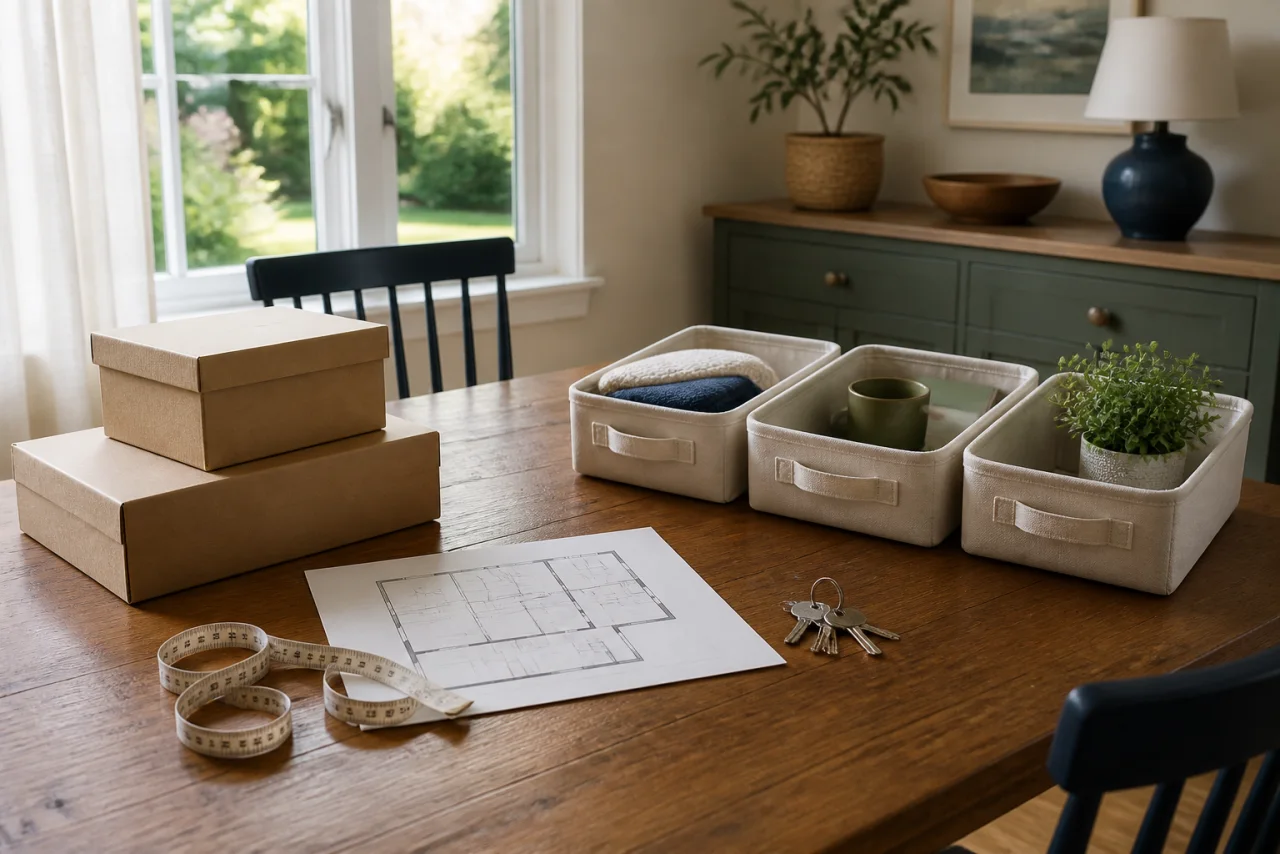
Stock photograph used for illustration; not a client property
What to do with the gear
Good containers in clean condition are easy to donate, and thrift stores in most Union and Essex county towns take them. Shelving and larger systems sell quickly on local marketplaces if you price them to go this week. Broken or stained plastic goes out with the regular trash or the municipal bulk pickup, which most towns run on set dates, so call public works early. The decluttering guide covers what else should leave with it, and the garage guide handles what should not be stored out there at all.
For buyers: what the empty bins tell you
A basement or garage full of storage products is not a defect, but it is information. It usually means the house is tight on built-in storage and the owners have been compensating. Measure the closets, count the built-in shelving, and look at the attic access and basement ceiling height before you fall for a well-organized garage. The inspection question list helps you judge the house rather than the staging.
Where this fits in listing prep
Clearing the aspirational clutter comes before the closet edit and before photos, because you cannot stage a closet you cannot see into. Related guides:
- The 90/90 rule for closets: a fast wardrobe edit before listing
- Pro organizer decluttering rules for NJ home sellers
- The clutter closet strategy for NJ sellers
- Downsizing a NJ home: property and move planning
Getting a NJ home ready for listing photos?
Jorge walks the house with you before the photographer comes and tells you which closets, shelves and bins are costing you in photos and which systems are worth keeping.
Book a Pre-Listing WalkthroughSeller ResourcesQuestions about clutter, storage and selling a NJ home
What is aspirational clutter?
It is anything you keep because it represents a plan or a version of yourself rather than your actual week: hobby equipment you do not use, kitchen gadgets for meals you do not cook, and the organizing products you bought to fix the clutter. The term comes from professional organizer Dr. Regina Lark, cited in a Better Homes & Gardens article that House Outlook linked this week.
Should I remove storage bins and organizers before listing my NJ home?
Remove the ones that are empty, half full or never installed. Keep the systems that hold things you use every day and that leave visible space around them. Buyers judge a closet by how much room it appears to have, and a wall of containers reads as a storage shortage.
Do organized closets help sell a house in New Jersey?
Clean, uncrowded closets help. Heavily engineered closets do not add value on their own, and they can make a small closet look smaller. The goal is visible shelf and floor space, a few labeled boxes, and nothing a buyer has to step around.
Where can I donate storage containers and shelving in NJ?
Thrift stores and donation centers in most towns accept clean bins, baskets and small organizers. Larger shelving sells quickly on local marketplaces when priced to move within the week. Damaged plastic goes out with the trash or the municipal bulk pickup; check your town’s public works schedule.
What should a buyer think when a garage or basement is full of storage products?
It is not a defect, but it often means the house is short on built-in storage and the owners have been compensating. Measure the closets, count built-in shelving, and check attic access and basement ceiling height before giving the house credit for being organized.
Sources reviewed October 15, 2026, including the House Outlook newsletter link to the Better Homes & Gardens article on aspirational clutter. Decluttering and donation suggestions are general guidance drawn from Jorge’s experience; check your municipality’s bulk pickup rules and confirm any inclusion or contract question with your agent and attorney.