The Move-Out Question: The One Decluttering Test That Works When You’re Actually Selling a NJ Home
House Outlook published a decluttering approach it calls the Move Out Method. Instead of four boxes or a joy test, it asks one question about every item: if I were moving, would I pay to pack and carry this? Most decluttering advice asks you to imagine that. If you are listing a New Jersey home this fall, you do not have to imagine anything.
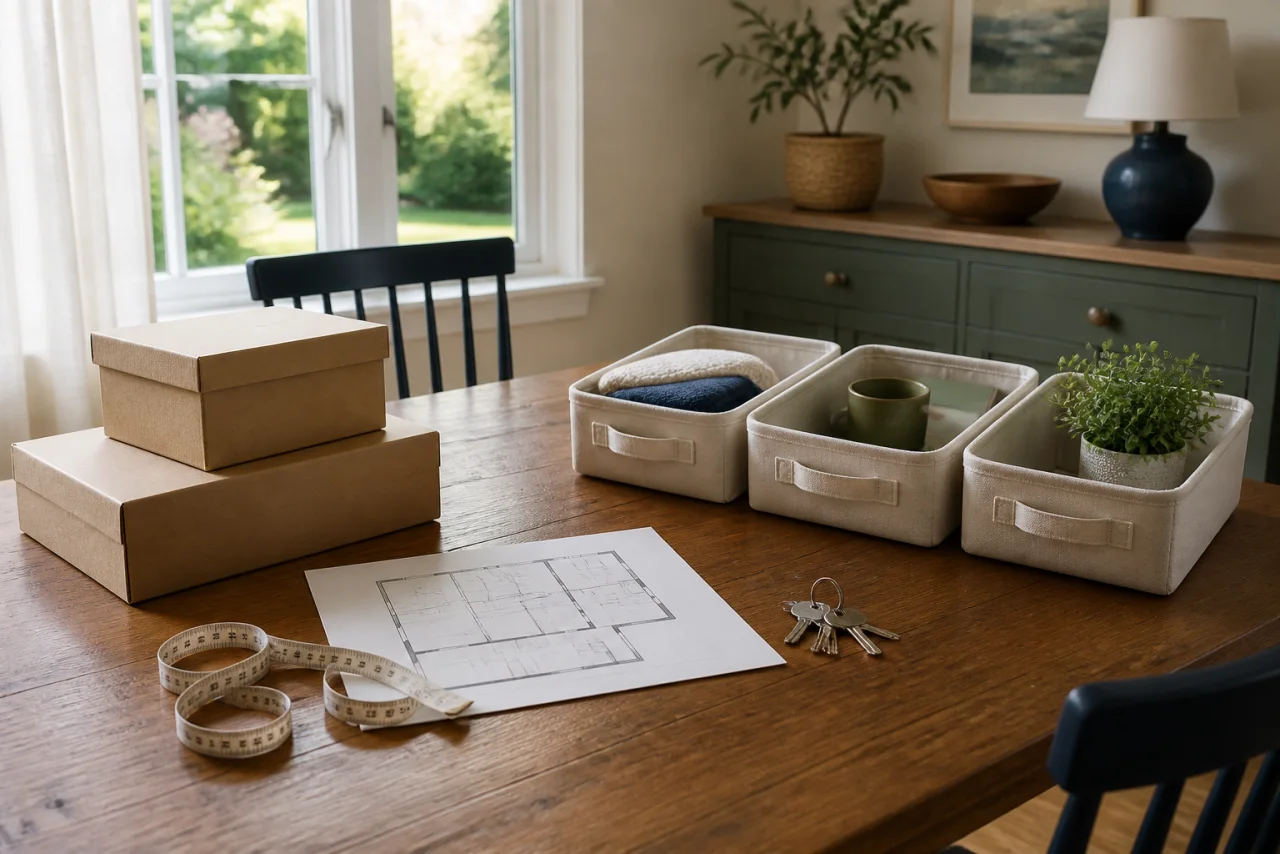
Stock photograph used for illustration; not a client property
The tip House Outlook published
The House Outlook article positions the Move Out Method as an alternative to the systems most people have tried and abandoned: the four-box sort, the joy question, the one-in-one-out rule. Its single question is practical rather than emotional. Would you pay a mover to wrap this, box it, carry it down the stairs and carry it up the next set? If the honest answer is no, it does not need to be in your house now either.
For most readers that is a thought experiment. For my sellers it is the actual bill. Every item that stays in a Westfield colonial through closing gets packed, weighed and carried into whatever comes next, and the mover charges by the hour and the truck.
Why this question fits a seller better than any sorting system
Sellers have two reasons to clear a house, and the Move Out question answers both. The first is the move itself. A family going from a Summit house to a Morristown townhouse is losing square footage and paying to carry every box. A couple going the other way, from a Jersey City two-bedroom to a Scotch Plains house, still pays by the hour, and that hour is better spent on furniture than on a closet of things they stopped using in 2019.
The second reason is the showing. A closet half full reads as storage. A closet packed to the door reads as too small, and buyers in Cranford and Maplewood capes already worry about closets. A basement with a clear floor reads as dry and usable. The same basement with twenty years of boxes reads as a problem they will have to deal with. The question clears both at once.
How to run the question room by room
- Start where buyers judge storage: closets, the garage, the basement and the attic. These rooms change the most with the least effort, and they are where a buyer forms an opinion about space.
- Ask it per item, not per shelf. Three answers only: yes, no, not sure. Yes goes back or into a labeled moving box. No leaves the house this week.
- Box the not-sure pile and date it. If you have not opened the box by the time the movers come, the answer was no. Do not reopen it to decide again.
- Pre-pack the yes items you will not touch before closing. Off-season clothes, holiday decorations, books, the second set of dishes. You will pack them anyway. Packing them now empties the closet for photos.
- Move the boxes out of sight. A storage unit, a relative’s basement or a portable container is best. If they stay, stack them in one corner of the garage, labeled, away from the furnace and water heater, so they read as a move in progress.
- Clear the no pile in four directions. Sell what has value, donate what is in good condition, book the municipal bulk pickup for the rest, and call a hauler for whatever is left. Most towns schedule bulk pickup on set dates, so call public works first.
Jorge’s tip: Run the question on furniture too. The extra armchair, the second dresser and the treadmill in the spare bedroom all cost money to move and make the rooms photograph smaller. If you would not pay to move it, it should not be in the listing photos. The furniture layout guide covers what to do with the rooms once the extras are gone, and the pro organizer rules handle what stays.

Stock photograph used for illustration; not a client property
What not to get rid of
The question has limits in a sale. Built-ins, window treatments, mounted brackets, the shed and any appliance listed as included may have to stay under the contract, whether or not you would pay to move them. Keep manuals, warranties, remotes, spare keys, permit records and inspection reports together in one box that does not leave until closing day. Read what stays with the house in a NJ sale and confirm inclusions with your agent before the listing goes live. For the sentimental items, the keep, pack or review guide is the better tool.
For buyers: how to read a decluttered house
An empty closet does not add square footage. Measure it. Look at the basement floor and walls, not the absence of boxes. Open the garage cabinets. A house that has been cleared for sale is easier to see, which helps you, but it also hides nothing and reveals nothing about condition. Use the inspection question list and judge the house, not the staging.
Where this fits in listing prep
Decluttering comes before photos and before any paint or repair decision, because you cannot judge a room you cannot see. Related guides:
- The 90/90 rule for closets: a fast wardrobe edit before listing
- Garage storage and disposal before a NJ home sale
- Thrift store donations and decluttering for NJ home sellers
- Downsizing a NJ home: property and move planning
Clearing a NJ home before listing photos?
Jorge walks the house with you before the photographer comes and tells you which rooms are costing you in photos, which boxes can leave now, and what has to stay under the contract.
Book a Pre-Listing WalkthroughSeller ResourcesQuestions about decluttering and selling a NJ home
What is the Move Out Method of decluttering?
It is a single question applied to every item: if I were moving, would I pay to pack and carry this to the next place? Anything that gets a no leaves now. It replaces sorting systems and joy tests with the cost of the move, which is why it works so well for people who are actually selling.
How much should I declutter before listing my NJ home?
Enough that closets, the garage and the basement look like they have room to spare. A closet half full reads as storage; a closet packed to the door reads as too small. Furniture should leave a clear path through every room, and surfaces should hold a few items, not a collection.
Where do I put the boxes while my NJ home is on the market?
Off site if you can: a short-term storage unit, a relative’s basement or a portable container. If they stay in the house, stack them neatly in one corner of the garage or basement, labeled and away from the furnace and water heater, so buyers read them as a move in progress rather than clutter.
What should I not get rid of before selling a house in New Jersey?
Anything the contract may require you to leave, such as built-ins, window treatments, mounted brackets, the shed or appliances listed as included, plus manuals, warranties, keys, remotes, permits and inspection records. Keep all of that together and confirm inclusions with your agent before the listing goes live.
How do I get rid of a large no pile quickly in NJ?
Split it four ways: sell, donate, municipal bulk pickup, and junk haulers for what is left. Most towns schedule bulk or large-item pickup on set dates, so call public works early. Donation centers take furniture in good condition, and a hauler can clear a basement in a morning.
Sources reviewed October 14, 2026, including the House Outlook article on the Move Out Method of decluttering. Decluttering suggestions are general guidance drawn from Jorge’s experience; check your municipality’s bulk pickup rules, and confirm any inclusion or contract question with your agent and attorney.