Hanging Pictures Straight and at the Right Height: The Wall Art Rules NJ Sellers Should Follow Before Listing Photos
House Outlook’s newsletter this week linked a Lifehacker piece on hanging pictures perfectly: paper templates, painter’s tape, the center-at-eye-level rule, a real level instead of a guess. Good advice for anyone. For a seller in Westfield, Montclair or Morristown it is a different job, because the question is not only how to hang art straight but which art should still be on the wall when the photographer arrives, and how to do it without turning the plaster into Swiss cheese.
Stock photograph used for illustration; not a client property
The House Outlook idea
The linked list is practical. Trace each frame on kraft paper, tape the templates to the wall and move them around before you drive a single nail. Press a dab of toothpaste or a strip of painter’s tape across the hanger to transfer the hook location to the wall. Use a level, or a level app, rather than your eye. Center the piece at about 57 inches, the height museums use. Hang art in relation to the furniture under it, not the ceiling. None of it is new, and most of it is ignored.
The rule that matters most
Center the art at eye level, 57 to 60 inches from the floor to the middle of the piece. Over a sofa, console or headboard, drop it so the bottom of the frame sits six to eight inches above the furniture, and make the piece or grouping about two thirds the width of what it hangs over. Most art in New Jersey houses hangs too high and too small. In a listing photo, a lone eight-by-ten floating a foot above a sofa makes the wall look empty and the sofa look lost.
Fewer holes, straighter frames
- Templates first. Paper cutouts and painter’s tape cost nothing. Every miss with a nail is a hole you have to patch, sand and touch up before photos, and touch-ups rarely match on a wall that has not been painted in ten years.
- Use the holes you have. If a piece comes down, hang the replacement on the same nail where you can. Fewer new holes, fewer repairs.
- Two hooks, not one. A frame on two hooks a few inches apart stays level when the front door slams and a buyer’s shoulder brushes it in a hallway.
- Level to the room, not the bubble. In a 1920s colonial in Maplewood or a Jersey City brownstone, the floors and ceilings are rarely true. Align the frame with the nearest trim line or the ceiling so it looks straight in the photo.
- Respect plaster and tile. Old plaster wants a proper picture hook or the picture rail that is already there. Never drill into tile or hang on wallpaper the week before listing; both are repairs no buyer wants to inherit.
Jorge’s tip: Photograph every wall before you take anything down. It tells you where holes will need patching, and when a buyer asks what hung in a faded rectangle on the dining room wall, you can answer. Keep the paint color record next to those photos for the touch-up.
Stock photograph used for illustration; not a client property
What comes down before the photographer
Family photos, wedding portraits, diplomas, children’s names and anything with your last name on it. Buyers should picture themselves in the house, not feel like guests in yours, and a wall of personal photos keeps them polite and distant instead of opening closets. Religious or political art goes into a box for the same reason. What stays is neutral: landscapes, abstracts, mirrors, a large piece over the fireplace, a matched pair in the primary bedroom. If a wall is left bare after the edit, one correctly sized piece beats a cluster of small ones; the rule of three guide covers how to group what is left.
Stairwells and hallways
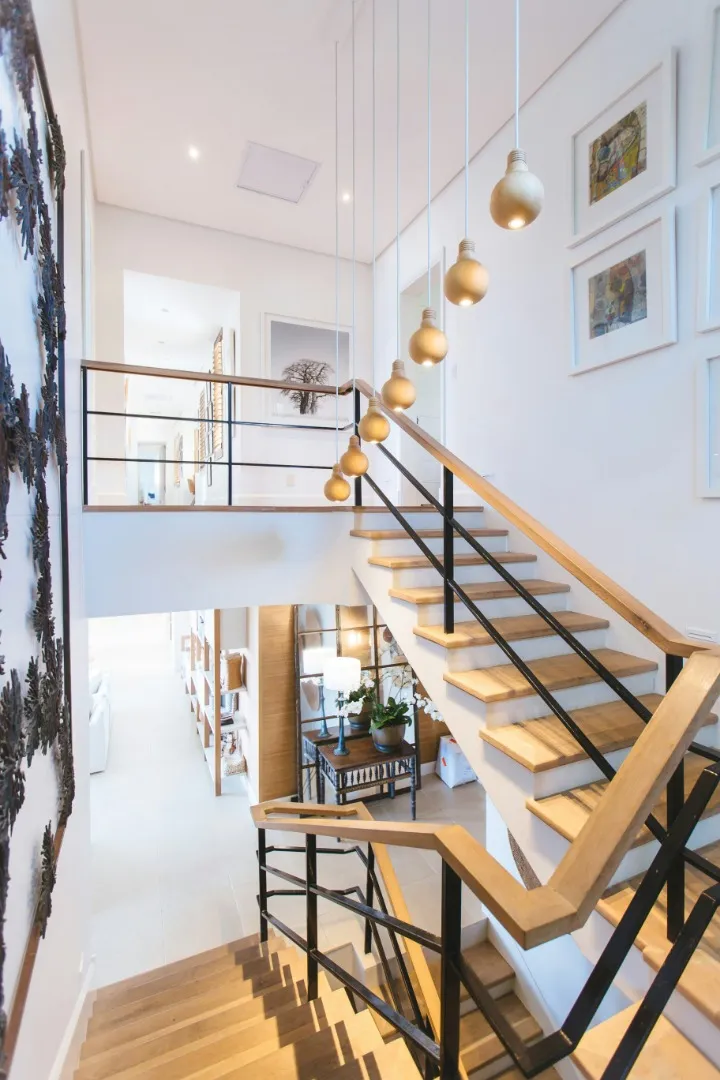
These are where gallery walls live in Summit, Chatham and Montclair, and where they go wrong. A stairwell gallery should step up with the stairs at a consistent height above the treads, with the same two to three inches between frames. Photographers shoot stairs, and a crooked column of mismatched frames is the first thing in the picture. If you are not confident, take the stairwell down to one or two pieces and patch the rest.
For buyers: read the walls
Fresh patches in a tidy pattern above a sofa mean a wall-mounted television came down; check that the mount’s lag bolts were removed and the cable outlet still works. A rectangle of darker paint means art hid fading, which is normal, or hid a repair, which you should ask about. Ask in attorney review whether mounts, brackets and mirrors stay; a fixed mirror and a television mount are usually fixtures, a hanging picture is not, and the what stays with the house guide explains how it is written into a New Jersey contract.
What this does for the sale
Art does not change value. It changes whether a listing photo of a living room in Cranford or Livingston looks finished or unfinished, and whether a buyer walking the hall thinks about the house or about the people who live in it. Hang less, hang it lower, hang it level, and patch what you moved.
Related guides
- Fixing nail holes before listing photos
- The rule of three for listing photos
- Design fixes for the eyesores buyers notice
Getting a NJ home photo-ready?
Jorge walks the house with you before the photographer, wall by wall, so what comes down, what stays up and what gets patched is decided before the camera arrives.
Book a Pre-Listing WalkthroughSeller ResourcesQuestions about hanging art before listing
How high should pictures hang before listing photos?
Center the piece 57 to 60 inches from the floor, or six to eight inches above the furniture it hangs over, whichever is lower. Most art hangs too high; dropping it a few inches makes a room read finished in photos.
Should I take down family photos before showings?
Yes. Personal photos, diplomas and anything with your name on it keep buyers polite and distant instead of picturing the house as theirs. Replace with neutral art or leave the wall clean and patched.
Do I have to patch the holes from pictures I took down?
Patch, sand and touch up every visible hole before photos. Buyers read a wall of holes as deferred maintenance, and it shows in listing photos at full screen. Match the paint from your color record or repaint the wall.
Is a gallery wall or one large piece better for selling?
One correctly sized piece almost always photographs better. A gallery wall only works when the frames match, the spacing is even and the subjects are neutral. If you are unsure, take it down to one or two pieces.
Do television mounts, mirrors and brackets stay with the house in NJ?
A bolted mount or a fixed mirror is usually treated as a fixture that stays; a hanging picture is not. List what stays and what goes in the contract and confirm it with your attorney during attorney review.
Sources reviewed October 19, 2026, including the House Outlook newsletter item linking Lifehacker’s picture-hanging hacks. Staging suggestions are general guidance drawn from Jorge’s experience; use hardware rated for your wall type and confirm what stays with the house with your attorney.