The Rule of Three: The Designer Habit That Makes NJ Listing Photos Look Finished
Designers arrange things in threes because the eye settles on an odd number. House Outlook explained the rule. Here is how it earns its keep in a New Jersey listing, from a Summit console table to a Hoboken condo shelf.

Stock photograph used for illustration; not a client property
What the rule of three says
House Outlook’s explanation is simple. People notice patterns, and a group of three objects is more interesting than two and less busy than five. The rule scales: it works for a vignette on a side table, for art on a wall, and for the layout of a whole room. The most useful line in the piece is the recipe for a trio that always looks finished: one tall item, one low or horizontal item, and one sculptural piece. A lamp, a stack of two books and a small bowl. A vase of branches, a tray and a candle.
That is decorating advice. For a seller it is also a way to stop guessing. You do not need an eye for design to put three things on a console and walk away.
Why it photographs well
Listing photos are shot wide, from a corner, with a lens that stretches everything near the edges. Surfaces with one object look bare, and surfaces with six look messy. Three objects at three heights read as a deliberate focal point even at the small size buyers see on their phones. The same rule applies to walls. One large piece, or three pieces hung as a group, looks finished. Two pieces of different sizes usually look like something is missing, and a gallery wall of twelve looks like the sellers’ life, not the buyer’s.
The seller’s version, room by room
- Entry console. A lamp, a bowl for keys, a plant. Nothing else, and no mail. That is the first surface a buyer in Westfield or Scotch Plains sees, so it sets the standard for the house.
- Kitchen counter. A cutting board leaned against the backsplash, a bowl of lemons or a plant, and one crock of utensils. The kitchen staging checklist has the rest of the counter plan.
- Living room. One tray on the coffee table with three things on it. On the mantel, one tall item at one end, a low one at the other, and something in between, or a single large mirror.
- Dining table. One centerpiece, not three. The rule of three applies to the whole room: table, chandelier, one piece of art. In a Morristown or Chatham dining room, that is enough.
- Primary bedroom. Each nightstand gets a lamp, a book and one small object, and both nightstands match. Over the bed, one large piece or three small ones in a row.
Jorge’s tip: Treat three as the maximum, not the minimum. A seller who hears “groups of three” and buys new decor usually ends up with more on the counters than before. Shop the rest of your own house first. Most homes in Cranford and Montclair already own more than enough lamps, bowls and books to style every surface.
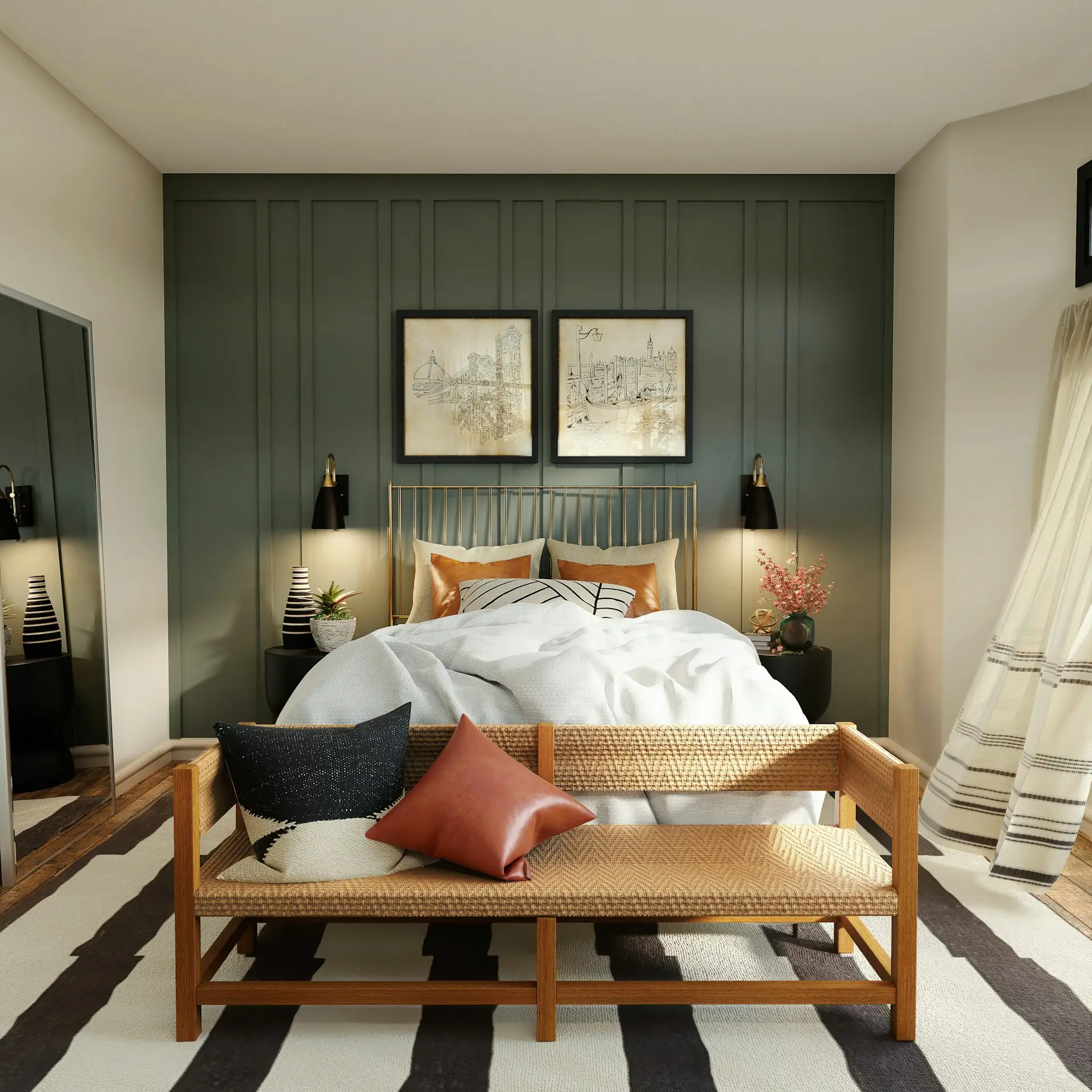
Stock photograph used for illustration; not a client property
Where the rule stops helping
The rule of three fixes surfaces. It does not fix a room. A trio of candles will not rescue a dark den with scuffed walls, and no buyer in Millburn or Livingston pays more for a styled nightstand in a bedroom with a stained ceiling. Paint, repairs and light come first. My guide to why staged rooms still feel flat covers the layering that has to happen before the accessories go down.
It also does not mean triple everything. Three throw pillows per sofa seat, three rugs, three accent chairs and three plants in one corner is how rooms end up looking like a showroom. Use the rule for the two or three surfaces a camera will see in each room and leave the rest empty. If proportion is the question rather than count, the 3-4-5 rule is the better tool.
For buyers: look past the trio
A well-styled console in a Jersey City or Edison listing tells you the seller prepared carefully. It tells you nothing about the roof, the electrical panel or the basement. Enjoy the photos, then do what the styling is designed to keep you from doing: open the closets, run the faucets, and read the inspection red flags before you write an offer.
Where this fits in listing prep
Styling in threes is the last step before the photographer arrives, after decluttering, repairs and paint. Related guides:
- Interior designer hacks for NJ staging
- Furniture visual weight and staging
- Home staging mistakes NJ sellers make
- Living room layouts that photograph well
Want a second set of eyes before your listing photos?
Jorge reviews every room the way a buyer will see it on a phone screen and tells you which surfaces to style, which to clear and which problems to fix first.
Book a Pre-Listing WalkthroughFree Home ValuationQuestions about the rule of three and staging a NJ home
What is the rule of three in home staging?
It is the habit of arranging objects, art or furniture in groups of three, usually with one tall item, one low item and one sculptural item. Odd-numbered groups read as deliberate and balanced, and three is enough to make a point without looking busy.
Does styling in threes raise my home’s sale price?
Not on its own. It makes listing photos look finished, which helps get buyers through the door. Price is set by condition, location, layout and the market, so paint, repairs and decluttering come before any accessory.
Do I need to buy decor to use the rule of three?
Almost never. Lamps, books, bowls, trays and plants you already own cover most surfaces. Shop your own house first, and treat three as the maximum number of objects on a surface, not a reason to add more.
How should I hang art for listing photos?
One large piece or three pieces hung as a tight group reads best in a wide photo. Two mismatched pieces and large gallery walls tend to look unfinished or personal. Hang art at eye level and center it on the furniture below it, not on the wall.
Should buyers care that a house is styled this way?
Only as a sign that the seller prepared carefully. Styling says nothing about the roof, systems or structure, so buyers should enjoy the photos and then focus on the inspection, the closets and the basement.
Sources reviewed October 1, 2026, including House Outlook’s guide to decorating with the rule of three. Staging suggestions are general guidance drawn from Jorge’s experience and do not establish a sale-price or timing outcome.