Reversible Styling Ideas Using What You Already Own
Treat styling as a small experiment you can undo. There is no need to claim professional design expertise or follow a rigid formula.
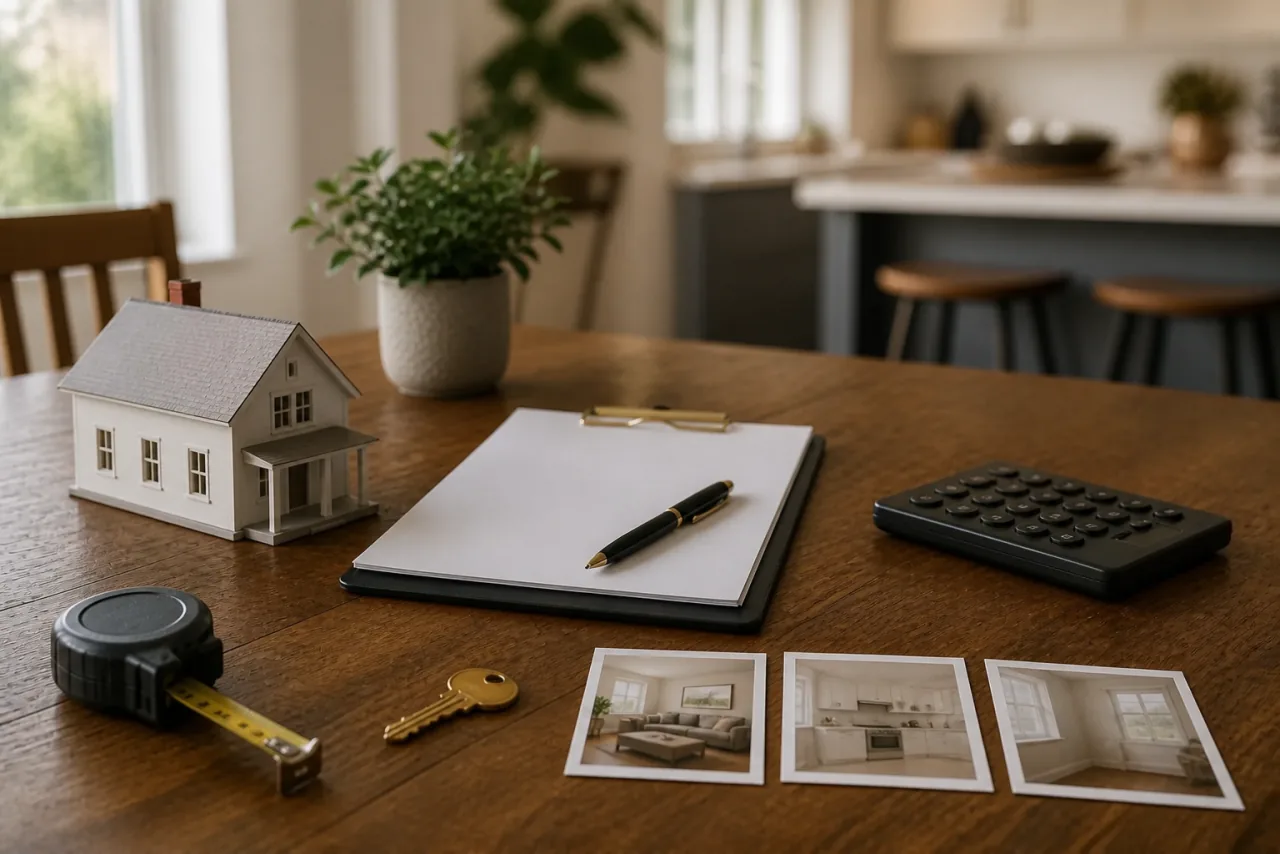
Illustration of home-preparation planning; not a photograph of a client property
Choose a single surface or corner
Pick a place you want to arrange differently: a console, a shelf or a seating corner. Photograph its current state, then decide what that area needs to do. A shelf that stores frequently used books has a different job from a surface intended only for display.
Set aside items temporarily in a labeled container. Do not donate or discard them during the trial. Keep the exercise separate from repair work and from the household’s privacy or security plan.
Try one of these small experiments
- Group related objects: arrange a few items that already share a material, color or use. Keep only the grouping you prefer; it does not need to contain an odd number.
- Give a useful object room: clear unrelated belongings around a reading lamp, serving tray or book stack so it can be used without moving several other things first.
- Repeat an existing color: if you like a color already in the room, try an owned textile or object that echoes it. Matching every item is optional.
- Compare textiles: fold or arrange the throws and cushions you already use in two different ways. Choose the version that works for daily use rather than the one that only survives a photo.
- Reduce a competing display: put one collection away temporarily and compare the result. A clear surface is also a valid choice.
Use a simple before-and-after test
Take the second photo from the same place and at a similar time of day. Ask what changed: Is the room’s function easier to understand? Can the surface still be used? Do you prefer the arrangement? Those questions are more useful than calling the new version “high-end.”
Keep a short note about the objects moved and where they went. If you are living in the home during showings, have the person who normally uses the room try the arrangement before adopting it.
Know when an idea is no longer a styling experiment
Mounting a heavy object, changing a fixture, altering a finish or moving something that needs professional handling is a different project. Do not turn a small display change into improvised installation work. Define that task separately and get the guidance it needs.
You also do not need to replace usable items solely because their colors differ. For an existing mix of furniture, the mixed-style checklist offers ways to make deliberate choices without buying a matching set.
Keep, adjust or undo
A useful trial ends with a decision. Keep the arrangement if it meets the room’s purpose and your preference, adjust one element if something is awkward, or put everything back if it did not help. Photograph the chosen version if you want a reference for resetting it.
These are optional presentation ideas, not claims about what NJ buyers universally like or what will increase a sale price. Discuss the whole property and listing plan with your agent before spending on additional staging.
Make a plan for your particular home.
Discuss your NJ home, timing and preparation questions with Jorge. A practical walkthrough can help you decide what to consider and what to leave alone.
Discuss Your Preparation PlanSeller ResourcesQuestions about this checklist
Do decorative groups need an odd number of objects?
No. Treat grouping as an optional visual experiment, not a rule. Choose an arrangement that you like and can use.
Should I buy accessories before trying these ideas?
No. Start with objects you already own and decide whether the area needs anything else after the trial.
Do these styling changes require permanent work?
The suggested trials do not. Installation, fixture or finish changes should be treated as separate projects with appropriate guidance.
Reviewed September 15, 2026. Styling suggestions are optional and subjective; no price, timing or buyer-response outcome is promised. This article presents an organizational checklist rather than market or technical findings.